Rethinking Human Creativity in the Age of AI
“These projects highlight a defining tension of the AI era: as technology speeds up innovation, it also reshapes human judgment, ownership, and responsibility.”


Dr. Moran Lazar of the Coller School of Management explores how artificial intelligence is transforming the way ideas are generated, evaluated, and brought to life, reshaping innovation at both the individual and organizational level.
In collaboration with H&M Israel, she examines the future of retail spaces at a time of declining foot traffic, rising e-commerce, and growing sustainability demands. Employees were given access to large language models (LLMs) and tasked with developing new, sustainable sources of growth. The findings reveal how AI can amplify human creativity, unlock unexpected business models, and reimagine physical stores as hubs for sustainable innovation.
In parallel, a global collaboration with Procter & Gamble (P&G) focuses on a critical bottleneck in the consumer goods sector: early-stage idea screening. Organizations must evaluate vast numbers of concepts under uncertainty, often relying on subjective judgment. Dr. Lazar’s research investigates
how employees work alongside “synthetic agents”,AI-driven evaluators, to assess product potential, offering new ways to scale and refine decision-making.
Together, these projects highlight a defining tension of the AI era: as technology expands the scope and speed of innovation, it also reshapes human judgment, ownership, and responsibility.
Beyond academia, Dr. Lazar works closely with startups and global companies, helping leaders design AI-enabled innovation processes and navigate the evolving partnership between human insight and machine intelligence.
Dr. Lazar is the Head of the Coller Institute for Venture.
The Not So Silent Garden
“By revealing that insects can eavesdrop on plants 'talking', the study could lead to new tools for pest control and crop health in agriculture.”
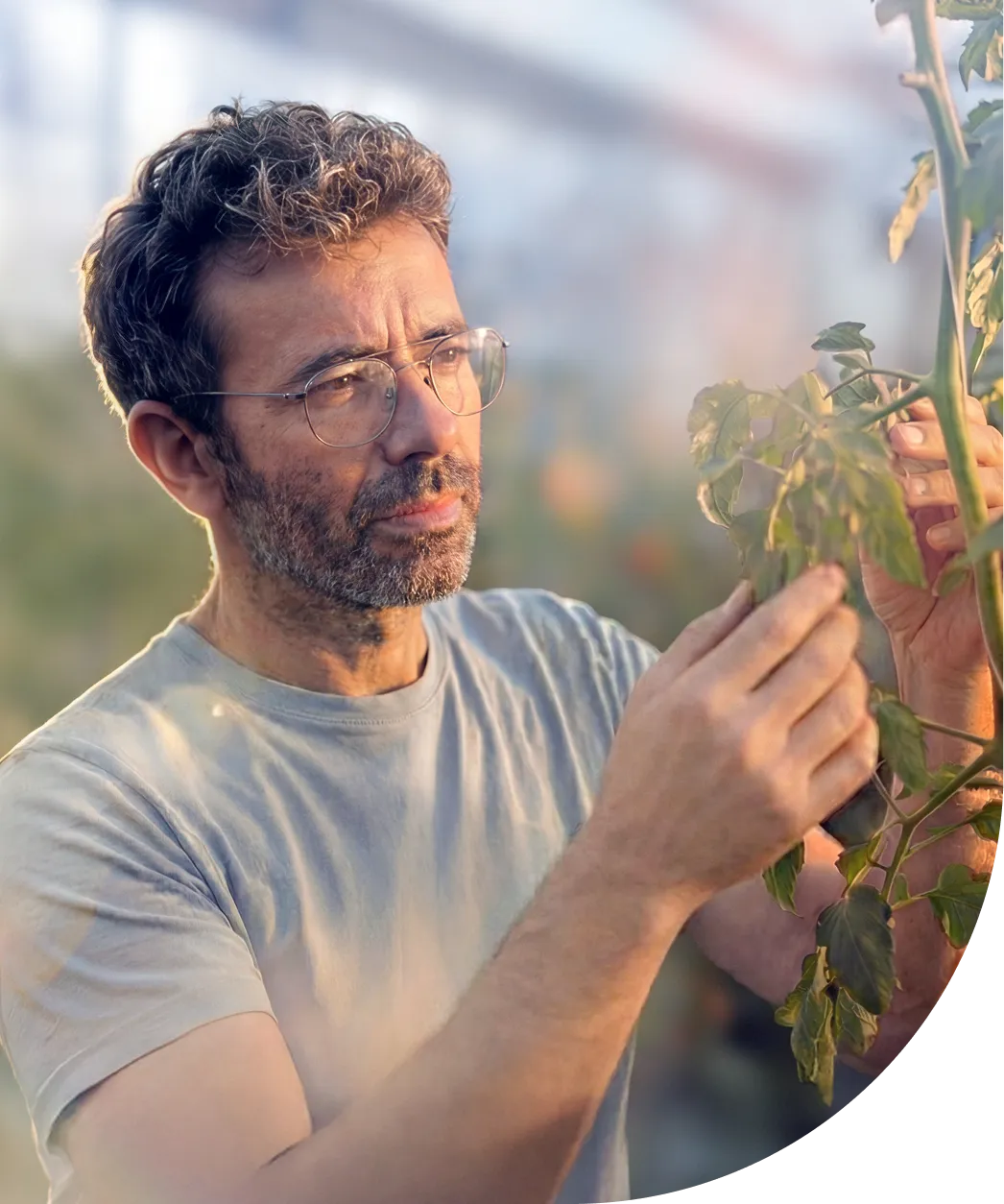
In nature, plants may be quieter than animals, but new research from Tel Aviv University reveals that they are far from silent. In fact, plants are sending out sound signals that insects can hear and respond to. A groundbreaking study led by Prof. Yossi Yovel and Prof. Lilach Hadany (Life Sciences) has uncovered the first scientific evidence of acoustic communication between plants and animals.
Postdoc student Dr. Rya Seltzer and PhD student Guy Zer Eshel discovered that female moths decide where to lay their eggs by listening to sounds emitted by nearby plants. These sounds are ultrasonic, far beyond the range of human hearing, but moths can detect them. When plants are under stress, such as dehydration, they emit distinctive clicking sounds. The moths appear to interpret these signals as warning signs and avoid laying eggs on those plants, choosing healthier, quieter plants instead.
To test this idea, the team designed a series of clever experiments. When moths were exposed to recordings of stressed plants, they behaved as if a struggling plant were nearby. But when the researchers disabled the moths’ hearing organs, the insects no longer showed a preference, clear evidence that sound was guiding their decisions.
The findings open a new window into the hidden conversations of nature. By revealing that insects can eavesdrop on plants “talking”, the study suggests that ecosystems may be full of acoustic interactions we have yet to understand. In the future, this insight could even lead to innovative tools for monitoring crop health or managing pests using sound itself as a signal.
Prof. Yovel is a member of The George S. Wise Faculty of Life Sciences and the Sagol School of Neuroscience.
Archaeology Project Turns Sakhnin into a Center of Shared Heritage
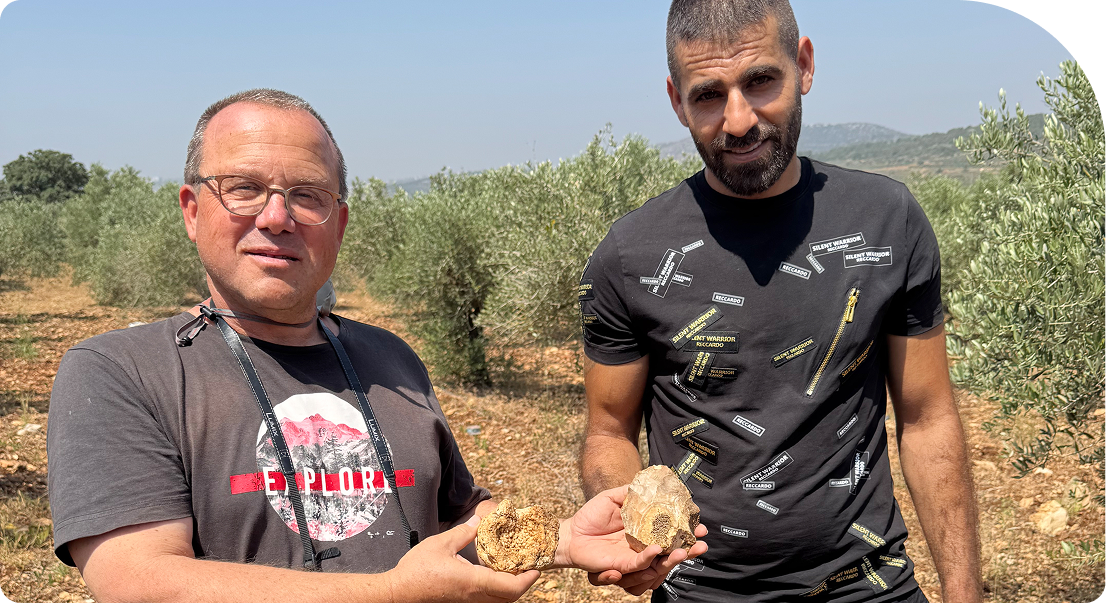
A collaboration between Prof. Ran Barkai (Humanities) and local researcher Muataz Shalata is transforming the study of early human history while building connections between communities. Their work in the Sakhnin Valley has uncovered extraordinary prehistoric finds and launched a long-term research project exploring ancient human behavior, technology, and culture. The initiative also engages Arab and Jewish communities through excavations, educational programs, and guided tours. Plans are underway for a public exhibition at the Karmiel train station that will share the discoveries with a broader audience. By combining scientific research with community involvement, the project is turning Sakhnin into a vibrant hub for archaeological discovery and shared cultural heritage.
Law Students Help Residents Navigate Housing Rights
A unique course, “Jisr al-Zarqa – Space, Planning, and Housing,” brings law students into the community to provide free legal assistance to residents. Led by Prof. Neta Ziv (Law), together with attorney Sharon Karni Kohn of the Hagar Carasso Social Housing Program, students travel weekly to the town’s social services center to help residents with housing registration, permits, and access to government benefits. Arab and Jewish students work together while applying what they learn in class to real situations. The program also explores how law can both challenge and reinforce inequality. By combining classroom learning with community engagement, the course equips students with practical experience while helping residents navigate complex legal systems.

Preserving the Sacred Texts of Beta Israel
The Orit Guardians program is documenting and preserving the biblical manuscripts of the Beta Israel (Ethiopian Jewish) community. Led by Prof. Dalit Rom-Shiloni (Humanities), the initiative focuses on sacred texts written in Ge‘ez that are often kept in private homes or synagogues and have rarely been accessible to researchers. Working with community leaders and cultural institutions, the team created the Digital Archive of Beta Israel Scriptures in partnership with the National Library of Israel and the State Corporation for Ethiopian Jewry Heritage Center. The archive allows manuscripts to remain with their owners while making digital copies available to scholars worldwide. By documenting hundreds of texts and training students in both research and fieldwork, the project is safeguarding a unique religious and cultural heritage.

Hebrew Olympiad Sparks Curiosity for Language
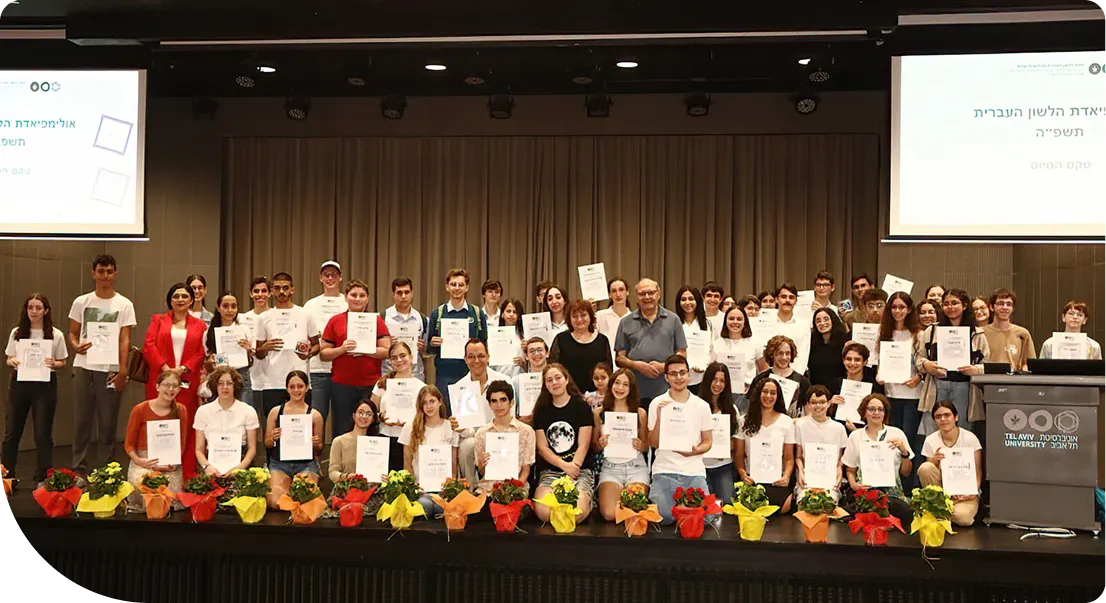
The Hebrew Language Youth Olympiad is inspiring thousands of students to rediscover the richness of Hebrew. Developed by TAU’s Department of Hebrew Language and Semitic Linguistics, the competition encourages creative thinking by asking students to solve language-based codes, explore word origins, and uncover the logic behind grammar and idioms. Since its launch in 2022, participation has grown nearly fivefold, from about 1,800 to more than 9,000 students. The program now includes a special track for non-native speakers, attracting Druze and Arab students in Israel and hundreds of international participants. By turning language into a challenge and a game, The Olympiad is helping a new generation appreciate the depth and creativity of Hebrew by transforming language into a challenge and a game